
Showing the single result
-
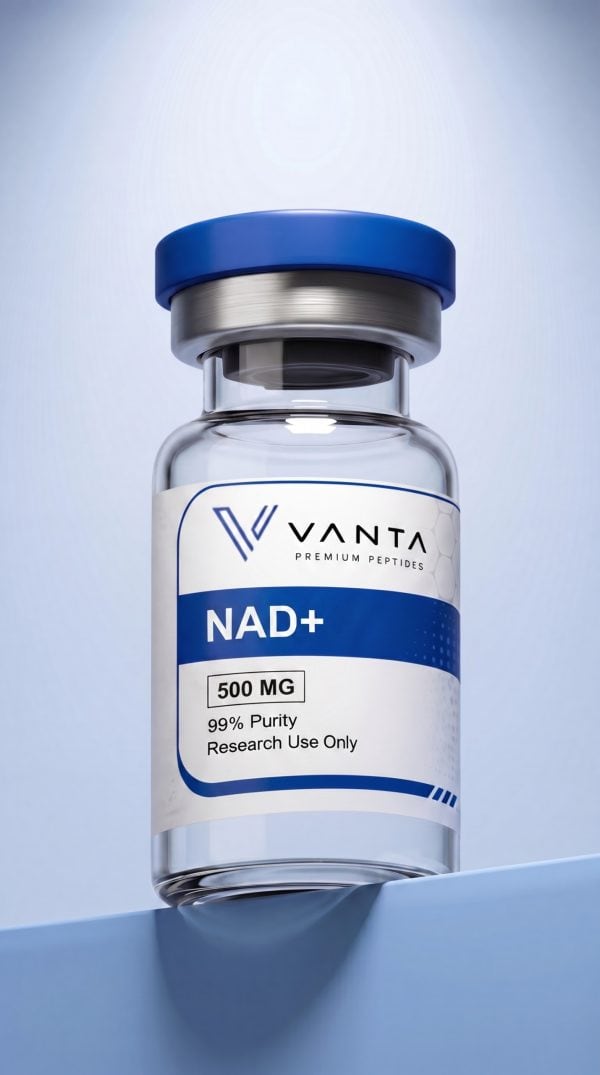
NAD+
$68$54 BUY 2 GET 1 FREE Cellular Research

About Cellular Research
This category covers compounds studied in cellular metabolism, mitochondrial function and redox signalling research.
NAD+ (nicotinamide adenine dinucleotide) is a coenzyme central to redox reactions across cellular metabolism, and a substrate for enzyme families including the sirtuins and PARPs. It is not a peptide — it's a dinucleotide — and it is grouped here on the basis of research application rather than chemical class.
Mitochondrial-derived peptides such as MOTS-C represent a more recently characterised area. These are short peptides encoded within mitochondrial DNA rather than the nuclear genome, a finding that revised long-standing assumptions about the coding capacity of the mitochondrial genome. Research in this area is comparatively young, and the literature is correspondingly thinner than for better-established compound classes.
Handling deserves particular attention in this category. NAD+ is hygroscopic and sensitive to both moisture and pH, degrading in aqueous solution more rapidly than many peptides. Preparing solutions fresh rather than storing them is the conservative approach — see reconstitution and storage for the conditions that matter.
Every batch is independently assayed with a batch-specific certificate of analysis. For laboratory research use only.