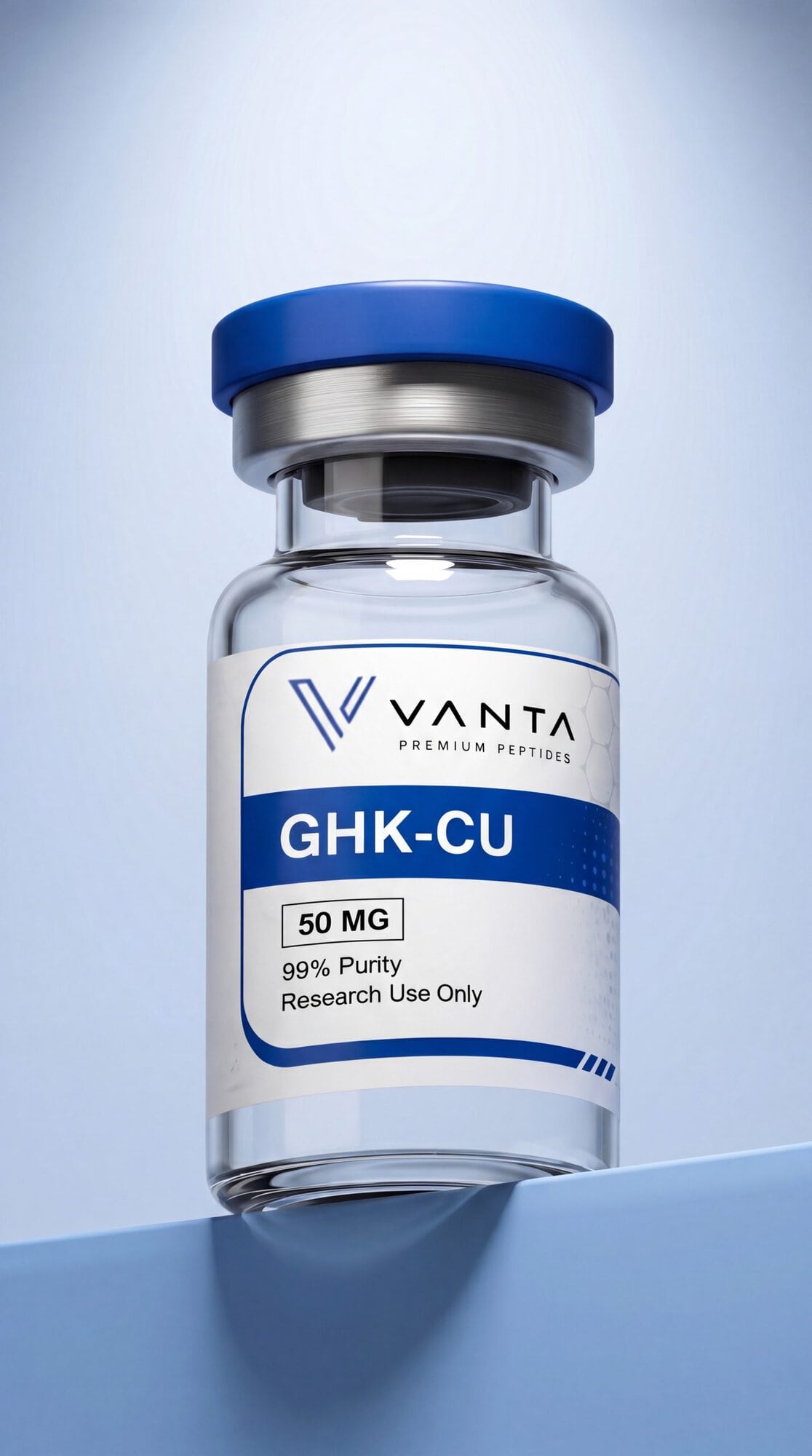
Copper Regeneration Tripeptide
GHK-Cu
The copper(II) complex of the tripeptide GHK — the most-studied copper peptide in skin and tissue research — investigated for collagen synthesis, skin remodeling, and wound repair. Supplied at ≥99% purity, lyophilized, with a batch-specific third-party COA. Laboratory research use only.
Product Details
GHK-Cu is the copper(II) complex of the tripeptide GHK (glycyl-L-histidyl-L-lysine) — one of the most extensively studied copper peptides in skin and tissue research. GHK occurs naturally in human plasma, binds copper with high affinity, and its levels decline with age.
How it’s studied
GHK-Cu is investigated as a regulator of tissue remodeling. The literature reports it stimulating collagen, elastin, and glycosaminoglycan synthesis, modulating matrix metalloproteinases (and their inhibitors), supporting angiogenesis and fibroblast function, and influencing a broad set of tissue-remodeling and DNA-repair-associated genes. A notable mechanistic point: some of its collagen-stimulating activity may derive from the copper ion itself, not the peptide alone.
Research context
The strongest GHK-Cu data is dermatological and topical; systemic claims are less well supported, and effects are concentration-dependent. This research-grade material is supplied for in-vitro and laboratory study only. For full mechanism and literature, see our [GHK-Cu Research Overview »].
Regulatory note (2026)
GHK-Cu is not an FDA-approved drug. It is widely used as a cosmetic ingredient (Copper Tripeptide-1) in topical skincare — a separate regulatory category from injectable or systemic use. It was among the peptides removed from the FDA’s Category 2 restricted list in 2026, which is distinct from drug approval. VANTA’s material remains strictly research-use-only.
Related research compounds
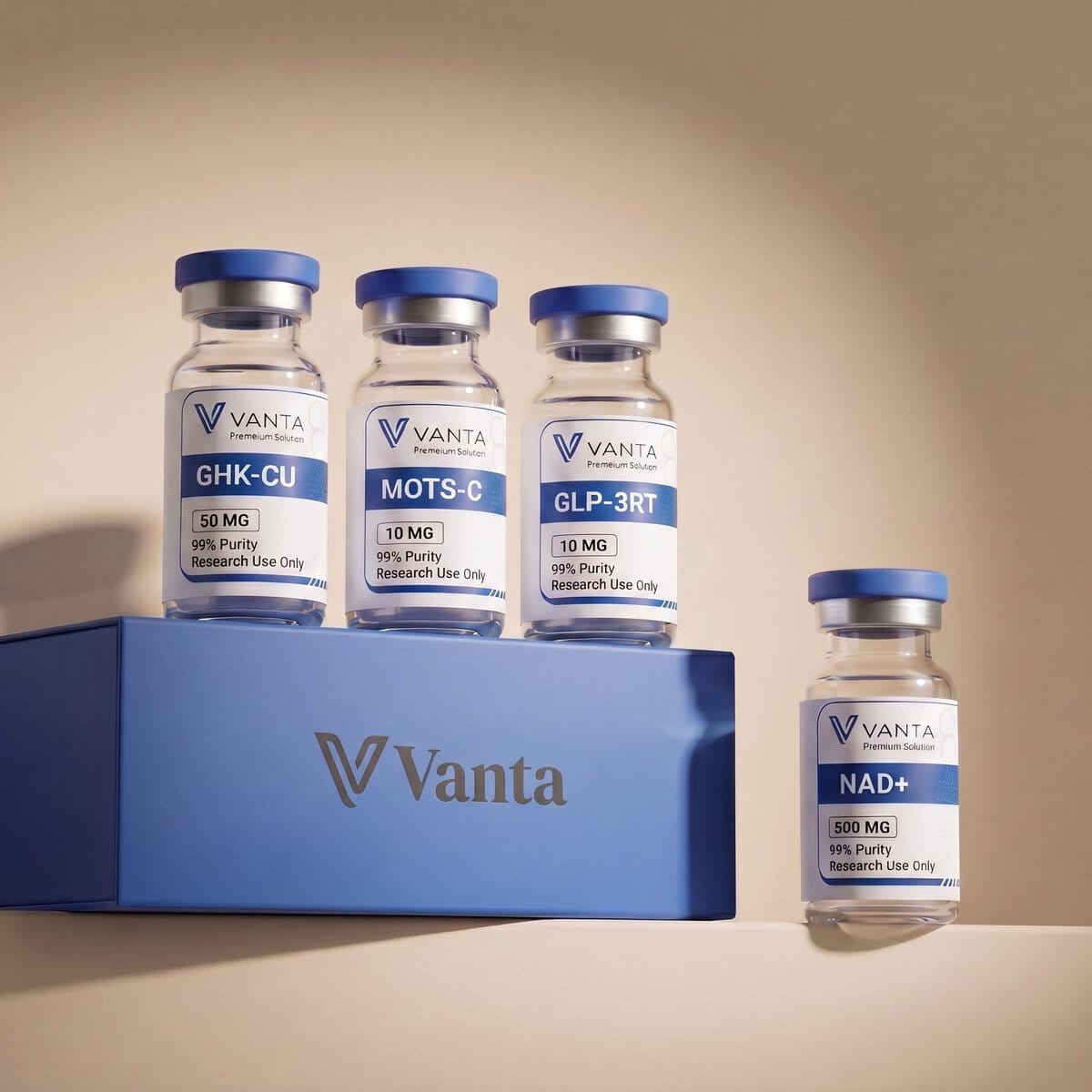
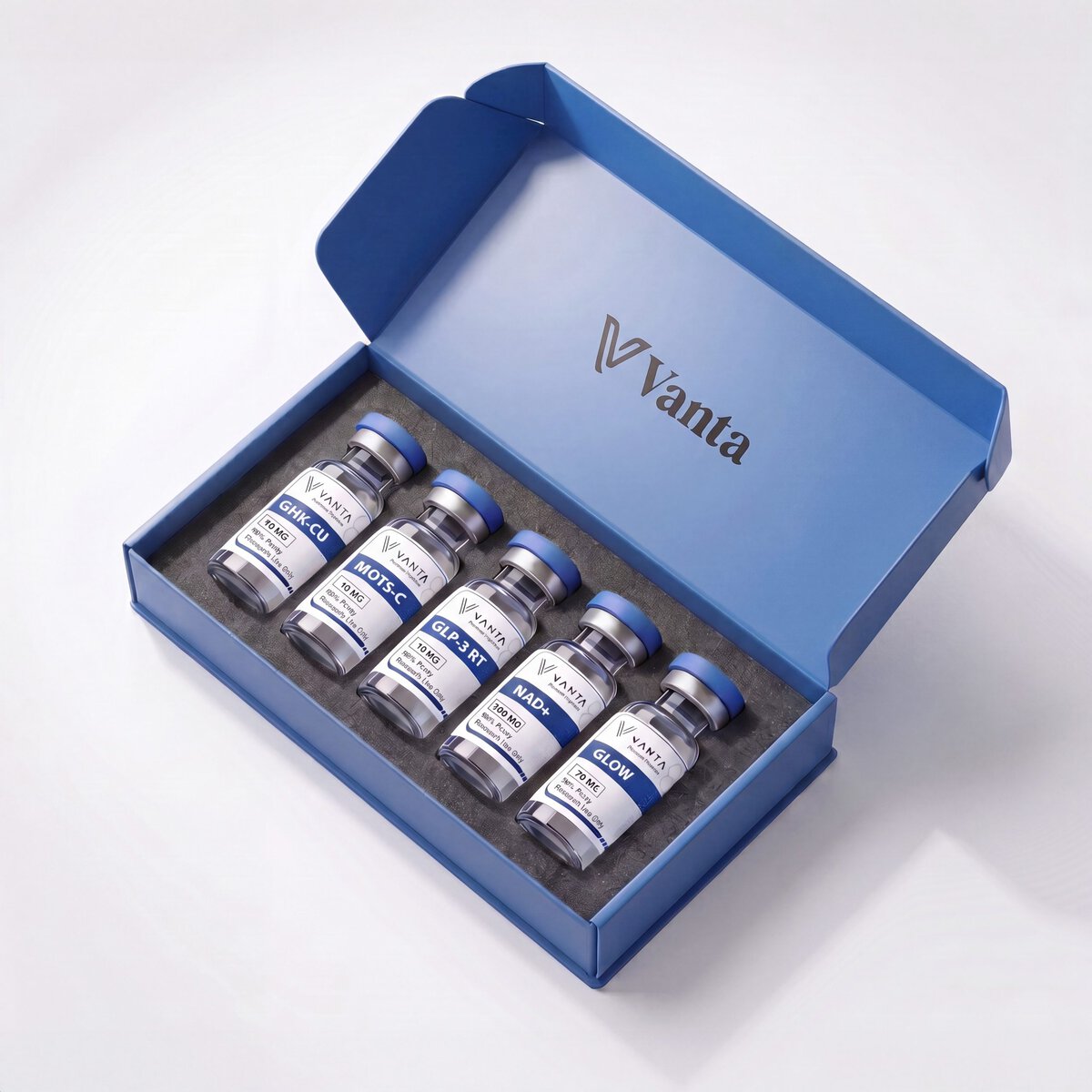
GHK-Cu is combined with BPC-157 and TB-500 in the triple [GLOW (BPC-157 + GHK-Cu + TB-500) »] blend for a skin-and-recovery focus, and is discussed alongside [BPC-157 »] in broader wound-healing research. Browse all [Recovery Research »] compounds.
Purity & testing
– ≥99% purity (this lot: 99.95% by HPLC)
– Lyophilized powder for laboratory reconstitution
– Batch-specific Certificate of Analysis — HPLC + mass spec, heavy metals, sterility, endotoxin
– ISO/IEC 17025-accredited third-party testing → [View the COA »]
Laboratory handling
Copper complexes are light-sensitive. Store lyophilized material cold and protected from light (long-term at −20 °C). After reconstitution, refrigerate at 2–8 °C, keep protected from light, and use within your protocol window. Confirm identity and purity against the batch COA before use.
Research FAQ
Why is GHK always paired with copper? GHK binds copper ions with high affinity and is typically studied as the GHK-Cu complex; some of its documented activity appears linked to the copper ion itself.
Is GHK-Cu the same as Copper Tripeptide-1? Yes — “Copper Tripeptide-1” is the cosmetic (INCI) name for the same GHK-Cu molecule.
For laboratory and research use only. Not for human or veterinary consumption, and not for diagnostic or therapeutic use. These statements have not been evaluated by the FDA.


